

Am I Neurodivergent or Just Annoying?
Yes, influencers are being annoying about "trendy" neurodivergent diagnoses. But sometimes, being annoying is part of the whole thing.

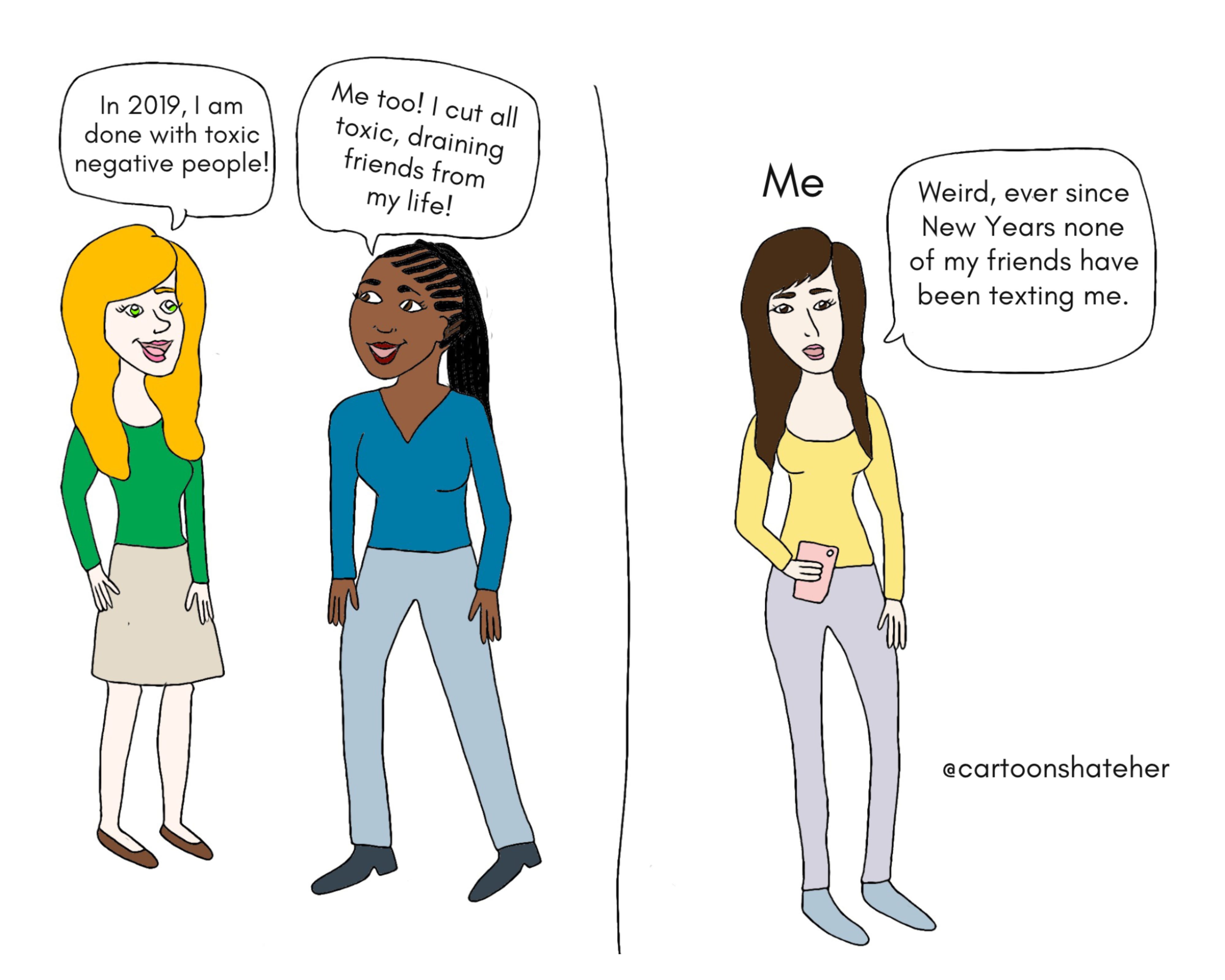
When I first got diagnosed with ADHD, I was about fifteen. My parents had taken me to see a psychologist, and after a forty-five minute session, she noted that the signs were obvious. “For one,” she said blithely, “There are obvious missed social cues.”
Okay, so finally—I had a diagnosis. I wasn’t just annoying. I was disabled. I was clinically annoying.
I never knew what I did in the session that outed me as being socially inept. Was I supposed to ask the therapist about her childhood too? Whatever I had done wrong, clearly she noticed. She was one of many psychologists to which my parents had taken me over the course of my childhood, searching for solutions to a problem I didn’t fully understand. I recall being picked up early from school many times to go take some kind of learning disability test or psychological evaluation (This was not a traumatic memory, as it often involved talking about myself, playing with toys, and most importantly, not being in school.) Shortly after my ADHD diagnosis, I was diagnosed with moderate OCD (which at the time was fairly debilitating. I had been showing symptoms from around age eleven onward, which I wrote about.) This was also no surprise—OCD is frequently comorbid with conditions like ADHD and autism. (Despite everyone on Twitter diagnosing me as such, I don’t have an autism diagnosis, nor do I believe I have autism.)
I know “neurodivergent” isn’t a real medical term, and I know it’s falling out of favor for being tryhard and annoying, but I’ve always preferred it to saying, “I have ADHD and OCD,” which sounds a bit like “look at my disability infinity stones.” Like, pick a struggle. But regardless of what I call it, getting these diagnoses was a relief after a childhood of wondering what the hell was wrong with me. Why was I so bad at socializing when I really enjoyed being around people? Why did nobody like me, even when I thought I was being really nice and outgoing? Why did girls have birthday parties that included all girls in the class except for me? Why did nobody want to listen to my Austin Powers impression or my Dr. Evil impression?
Getting a diagnosis didn’t change what people thought of me, but it least gave me an answer. And this answer made me feel like I wasn’t just an innately unlikable, socially doomed person. It’s no wonder, then, that people seek answers for their own social and emotional struggles in the form of a disability diagnosis. Wouldn’t you rather know your social problems are caused by a disability rather than just being unlikable?
You can, of course, be an annoying person who would still be annoying if you weren’t neurodivergent, but how would you know? It’s no surprise that as neurodivergence becomes what many refer to as a “trendy identity,” that content creators who talk about their conditions can come off as, well, annoying. But “neurodivergent people are annoying about it” is hardly proof that they’re all making it up for attention. Being annoying is part of it!
