

I Went On a Podcast to Find Out Why People Don't Like Me--and People Had Questions
It's a weird experience to have your favorite podcast interview you. It's even weirder when the topic is "what's wrong with me." A free article on my 47 minutes of fame.

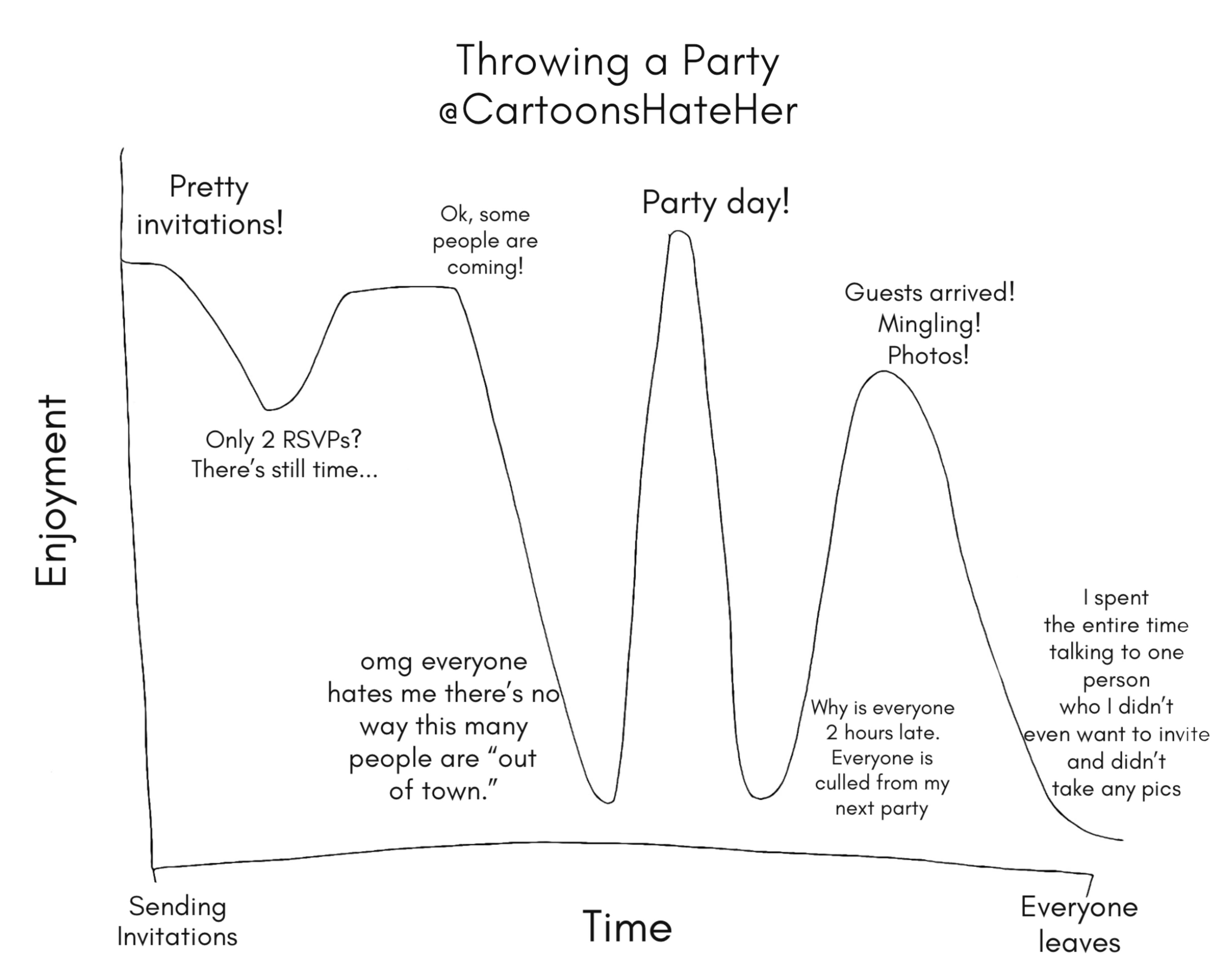
For many years, I’ve been obsessed with anything by podcaster PJ Vogt, so you can imagine I was starstruck when he reached out to me a few months ago asking if I wanted to go on his podcast, Search Engine, so he could use his investigative journalism skills to figure out why nobody comes to my parties. The idea came from the fact that PJ was already a paid subscriber of mine and had been for a while (major shock for me!) and had read my article on that same predicament.
People who listened to the episode two days ago had many questions and comments, including people who hadn’t heard of me before the episode. I read the Reddit thread on the episode, because of course. For those of you who think that’s an odd, insecure or defensive thing to do, I implore you to imagine that you just consented to a podcast episode that more or less boils down to “what’s wrong with me,” then you discover that 100 people have their own theories about what’s wrong with you and are discussing it together. You would have a hard time not reading these comments! And I will say, while some people were a little rude, it’s Reddit, and taking that into account, the rudeness was pretty mild, and some people were even helpful. A few people were so helpful and compassionate that I really took their points to heart, in the best of ways.
In any case, I have to remind myself that when you essentially take part in reality television, you stop being a regular person and become a character, and people have no qualms confidently deeming you “insufferable.” (As if that’s the first time I’ve heard it!) Honestly, if “annoying” is the worst thing they’re saying about you it’s probably not that bad.
But along with various comments and theories, there were questions! So I thought I’d answer those questions here. And while most of my content is paid, I’ve decided to make this free so that everyone who saw the episode can read it. Enjoy!
Why would you agree to do something like this?
Easy. It’s my favorite podcast, although with Feminine Chaos it’s basically tied. I had actually been taking a bit of a break from podcast appearances because podcast appearances almost never translate to subscriber growth—and I have to be pretty ruthless with my spare time when I’m publishing five times a week and being the primary, full-time childcare provider for a toddler (plus a school-age child in the sumer), so at this point I only do podcasts for fun. This was also why I did an episode with Christianity On The Spectrum, which should be coming out soon. (Similar topic: am I autistic or annoying? Many such cases.)
And in the spirit of only doing podcasts for fun, this was fun! I consented every step of the way. PJ handled my concerns about anonymity really well, and ran everything by me. I was not blindsided in any way when a few of the guests lightly roasted me. That was what I wanted! As PJ says in the closing segment, I laughed a lot. I was thrilled that we were able to get a friendly acquaintance (Meredith) to give an interview and be honest because my fear was that nobody would want to say anything mean and the episode would be scrapped.
He showed me the full episode before it launched, and my main feedback was that I was sad to have finished listening to it, because I could never listen to it for the first time again.
Are you mad at any of your friends?
No! One of my friends sent me a text, warning me that I might not want to be friends with her after hearing her interview, but her interview actually made me laugh so hard I cried. When I first listened to the episode, I was worried something or someone might go too far and bruise my ego, but nothing did. Because of my OCD and tendency to catastrophize, I was afraid that a disgruntled interview subject would make up some horrific and untrue story about me, like that I opened up all my parties by shouting a variety of racial slurs, so when it came down to “she did this weird thing, and it was weird” I was a bit relieved.
Why did you think people wanted to hear your stupid impressions?
I should clarify the timeline here because “forces everyone to sit down and listen to her impressions underneath an Ass Man license plate” is such obviously terrible hosting etiquette that some of you might wonder how the hell I can be self-aware enough to realize people don’t like me, and still stupid enough to do this. The answer lies in the timeline. This is not behavior in which I currently partake, or have for years. My San Francisco friend who was interviewed was referring to parties thrown in my early to mid twenties, when my social skills best resembled that of Borat (conveniently, another one of my favorite impressions. My wife!) I maintain that my close friends enjoyed these impressions, but newcomers didn’t. As she said, I am “not for everyone,” and that was even more true back then.
At the time, I oscillated between wondering if I should dial it back, and then telling myself, “Fuck the haters! People are just lame!” I didn’t know which direction to go, or what to work on, and on the occasion that I got constructive feedback, I would bury myself in cope and tell myself that people were just intimidated by how funny and interesting I was. Plus, as my husband pointed out in his interview, he was my enabler and frequently pushed me to do these impressions even when I suspected people didn’t like them, because he really liked them. Given my history with low self-esteem and toxic self-talk, I wanted to trust him that my insecurities about people not liking me were in my head. His support of these impressions was incredibly sweet, but ultimately not helpful. (I suspect his advice also backfired at my notorious work orientation where I was heavily excluded—he told me it was a great social move to brag to everyone about being a published author because “people will think it’s cool.”)
Look, who doesn’t want a spouse who thinks they’re hilarious and amazing and truly believes that everyone else feels the same way? I don’t mean to criticize him here. But some realism is helpful.
But eventually, I did dial it back. Parties thrown after 2018 or so—when I forced myself to really analyze my social interactions and think critically about how other people perceived me—did not include impressions, and by then I was making a conscious effort to be more “normal.” At the time, I wasn’t sure how much to censor and filter, and this is something on which I’m still working. As my brother made clear in his segment, this masking can come off as boring and insincere. But I also know that even if he and his friends really like it when I sit around and “hold court,” that’s not how you make actual friendships, and it’s not even how my brother and I interact one on one.
Why are you like this?
The fact that I’m annoying is a given, and I probably wouldn’t be a successful writer if I hadn’t leaned into it. A lot of this is probably just how I was born, especially given my ADHD and OCD. But one thing I didn’t get into on the podcast is the environment in which I was raised. I don’t remember back-and-forth asking of questions to be a significant part of my childhood. My parents were both very skilled storytellers, and they often told stories, and then I would interrupt them and tell another story, all the while my brother would wander off to go read about the Soviet Union or some shit. To this day, my husband tells me that when my mom visits, she and I repeatedly interrupt each other with stories while laughing, and they’re all stories we’ve already told. For a long time, “entertaining and being entertained” was how I experienced what it meant to be close to someone.
It’s not that my parents told me to behave this way—in fact, I think they picked up on the fact that I took it too far and probably lightly tried to correct me in ways that wouldn’t “dull my sparkle” or whatever—but I grew up in a household that really emphasized the importance of being funny and entertaining, so I grew up believing that if I was funny and interesting enough, people would really like me.
Why did nobody mention the fact that you’re hot?
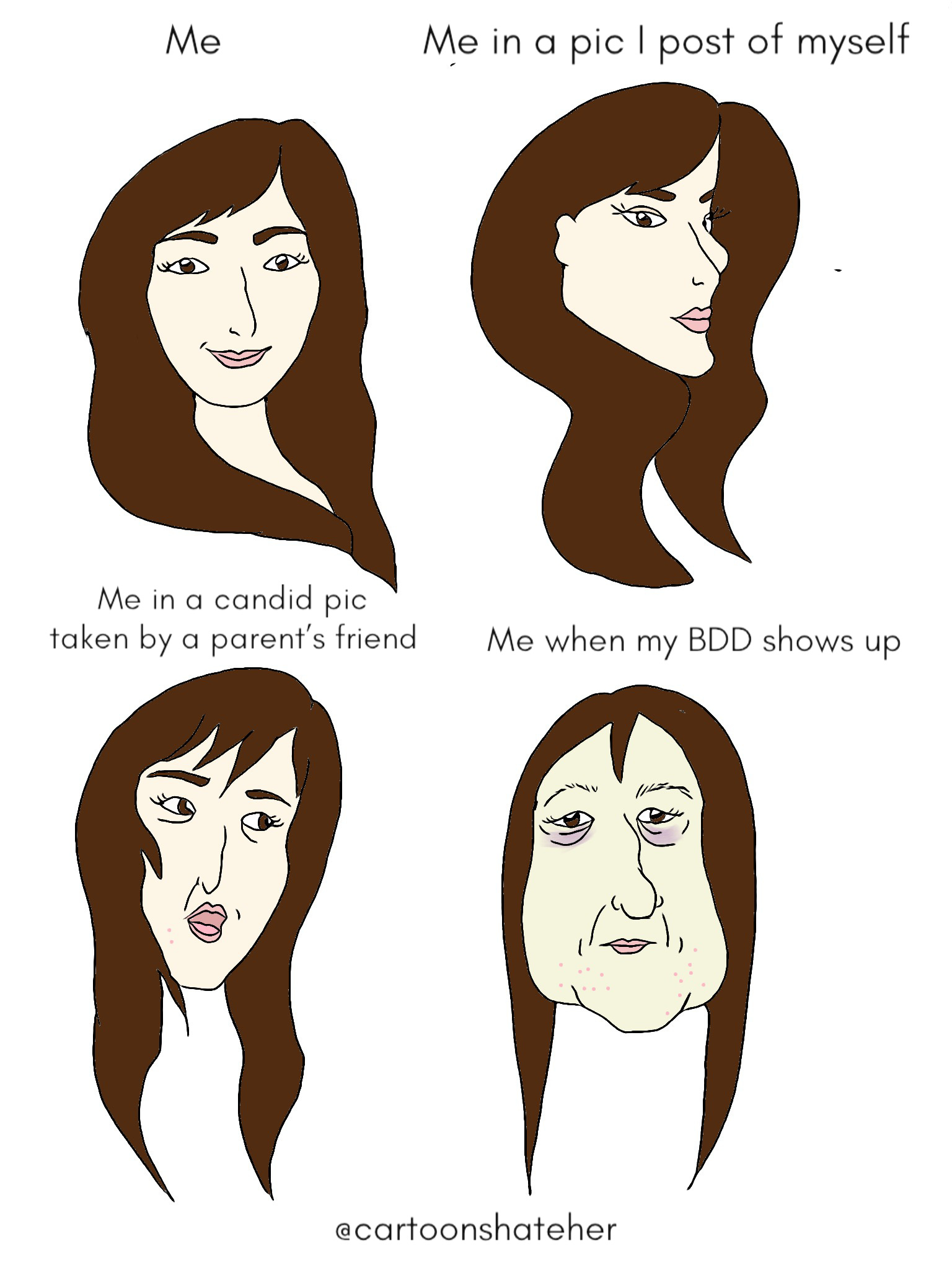
I am only addressing this question because it was a common question I saw, both on Reddit and on Substack, as ridiculous as it sounds for me to mention it. First, I want to clarify I do not self-identify as hot and find it a bit embarrassing to do so, but I can objectively admit I’m in good shape and I understand that, especially when you’re a mom socializing with other moms, this means something. For what it’s worth, I’m actually not a huge fan of my face but there’s no reason any of you would know that. I’m not completely chopped or anything, but I don’t walk around and see myself as a “hot girl,” just a mom who is reasonably fit for my age. When I walk into a room full of other women, I do not think that I am one of the best-looking ones there. When hot women talk about their life experiences of constantly being gawked at, I can’t relate. I wrote about how I can’t tell if this is because nobody is gawking at me, or because I just don’t pick up on it. But either way, that’s just not how I see myself.
But a lot of people did identify my appearance as a possible problem, especially in context with other women. I’ve already written about how I don’t think women avoid befriending attractive women out of jealousy, especially since lots of women more attractive than I am do not share my social struggles! (I knew a woman in San Francisco who had a face that actually looked like a TikTok filter—I’m pretty sure she had no pores—and not only did she have loads of friends but she was very nice!)
I think the theory that there is an unsettling mismatch makes a bit more sense than “women are jealous.” Basically, this theory is that I don’t look like a neurodivergent person, so people don’t code my neurodivergent behavior as anything other than off-putting the same way they might if I were a visibly geeky person. The combination of the way I look, the way I dress, and my particular brand of social weirdness (constant performance as opposed to shyness, although that’s mostly a thing of the past) does not come off as adorkable quirk chungus, but as a narcissistic, histrionic woman who is very full of herself and needs a lot of attention and validation. (I maintain Reddit comments about how I lack self awareness were unfounded.)
Even I can admit that I would not befriend someone who came off this way, so I have to remember that other people do not see me the way I see myself. I try to imagine how others might see me, and then imagine how I might see another woman who came off that way, and often this is a helpful reality check. At a party recently, a woman arrived who was, at least in my opinion, gorgeous, and for some reason my initial lizard-brain reaction was “She would never want to talk to me, she’s better than me.” Then we got talking, and she was not only lovely, but we had a lot in common! However, I’m wondering if my experience with her might have been different if she had been telling lots of stories or talking about herself, doing various “bits.” I might have just found her weird, or perhaps self-centered. So I have to remember that how I’m seen in my mind’s eye (a mid-looking dork) is probably different from how other people see me.
For example, I don’t see myself as feminine, but other people do. When I imagine how I must appear to other people, I do picture a visibly neurodivergent geek. As one Reddit commenter theorized, “she probably used to be ugly.” While I don’t know if I was ever really ugly, I was not viewed as conventionally attractive until later on, and I was definitely bullied for my looks (and not in a humblebrag “my waist was too small for my boobs and butt” way but more in a “men will never find you attractive” way) throughout my middle school years. Some unfortunate orthodonture comes to mind, is all I’ll say. So while there might be a mismatch between my personality and appearance, this is likely something for which I haven’t adequately corrected because in my mind, I’m not hot!
As for why PJ didn’t mention it, it’s possible he doesn’t think I’m hot (I did not ask) or he felt it was inappropriate to mention. You’ll have to ask him!
Why did you dismiss your brother’s advice?
The person who came out of the podcast with the most praise was definitely my brother and lifelong best friend. Although we are six years apart, we have a connection that I’ve only seen in twins. (In case anyone is a true CHH brother fan, here’s a fun treat: we attempted to start our own podcast, but only did one episode, which you can watch here.)
When I spoke to PJ, he told me that meeting my brother was like finding a professor who knew everything about an obscure ancient civilization, except that civilization was me. And it’s true. In a way, my brother’s special interest is me. Every now and then he will text me just to share some insights (sometimes not particularly flattering ones) about me. It’s a weird way to experience best friendship, but that’s what we are. And yes, I ask him questions about himself too, but often when I do this, he will laugh and say, “You don’t really care. You’re doing the thing again.” That said, when things are flowing totally naturally, we engage with each other the way we were raised—repeatedly interrupting each other with stories and laughing hysterically. And while he didn’t do it on the episode, I’ll have you know he does a great Trump impression and sometimes we just talk in the Trump voice together.
For those of you who haven’t listened to the episode, my brother’s theory was basically that the mismatch element of my appearance not aligning with my personality or socialization was what put people off. (He did not say I was hot because come on, he’s my brother, but he did say I looked and sounded like a normal mom while secretly having the inner world of a terminally online Reddit neckbeard covered in Cheeto dust—and to be fair, that’s basically the whole schtick of this Substack, so he’s correct.) But his advice was not that I should try harder to be normal, but rather that I should say, “Fuck these suburban normies, I’m going to be a weirdo with other weird people.”
My response to this advice—which sounded like complete rejection—was very brief in the podcast episode, but taken slightly out of context. As you can imagine, nothing I say is ever brief, so PJ had to pick one snippet from what was probably a full hour of rambling. Basically, I have no interest in pretending to be a Stepford wife for my entire life just so I can make friends with people I find boring and who hate me. But the steps I took to improve my social skills really did work, not to help me fit in with the PTA but to help me make real friends who actually like me. It’s not about pretending to be an entirely different person, but about knowing that I’m “too much” and not giving people a firehouse worth of me as soon as I meet them.
My brother views this “masking” as awkward and stilted, but I don’t think he’s seen me around other people enough to know (we don’t live in the same state.) When I started learning how to ask people more questions, it started out as a very deliberate choice, not genuine interest, and it probably did look weird. I went so far as to record people’s answers in a spreadsheet (not in front of them, of course) so I could pretend to have a great memory next time I saw them. But over time, asking questions and showing interest in other people genuinenly became second nature. Now, when I ask people questions, it’s because I actually care. And I’m no longer desperate enough to feel like I need to be friends with, or be liked by, everyone I meet.
But per the advice to “let my freak flag fly,” noble as it is…even geeks and weirdos don’t want to befriend someone who seems full of themselves, phony and constantly performing. Put another way, if the majority of people on a Reddit thread think I sound exhausting, I don’t think “just be friends with geeks and be yourself” is the answer. But it’s partially the answer. I realized as I optimized my social skills that while other people don’t owe me friendship, I don’t need to adopt a “beggars can’t be choosers” attitude. There are no friendship leagues, and some people will just not click with me. By reducing the amount of too-muchness to which I subject people, I can cast a wider net, but if I feel like I’m going to have to put on an act for an entire friendship, I don’t pursue it further.
Do you have autism?
I still don’t think I do. But I should clarify about having been tested “many times,” which is something I offhandedly said in the episode. I have never actually been specifically evaluated for autism. However, as a child, my parents did have me generally evaluated by psychologists several times, which I believe was an investigation into whether or not I had ADHD due to some trouble paying attention in school. Funny enough, I did not actually get an ADHD diagnosis until age fifteen. I don’t know if these psychologists were even thinking about autism, especially given that this was the nineties and many “mild” autism diagnoses in girls went missed. However, as an adult, I’ve taken diagnostic questionnaires many times and I never come out as being remotely on the spectrum. This could also be because these questionnaires focus heavily on a lack of interest in socialization and that’s not a problem I have. So, for now, I do not think I have autism, but my theory is that the combination of my OCD and ADHD essentially does a very good “impression” of mild autism.
So what’s your friendship situation now?
Well, not to brag, but right now I’m on a joint family vacation with my close friend, her husband, and my family. As I mentioned on the podcast, I now have a really good amount of friends, and I’m so happy with them. I’m always open to making new friends, but I’m no longer desperate to do it. Granted, my friends aren’t in a closely-knit group and we don’t all hang out together, but as I wrote about before, I don’t know if I really want that after a lifetime of thinking I was pining for it. Last night, my friend and I put our kids to bed and stayed up late drinking champagne and chatting until 1 AM, and it felt effortless and fun. We didn’t need a dress code, a big crowd in attendance, or anything else. In fact, we were in our pajamas.
But as I hinted earlier, one part of improving my social life has been identifying the type of friends who are right for me. This particular friend is very girly like me—she even loves to sew!—and has a child my daughter’s age. But she also has a “weird” side (and I say this in a positive way) where we both just feel like…we get each other. She has anxiety, although not OCD, so she understands that I always want my kids to be within my line of sight. She’s hilarious. She tells a great story. She laughs at the jokes I wouldn’t tell everyone else. She tells me she “can’t stand boring people.”
And the best part? We even hosted a party together one time. And lots of people came.
I have other friends like her, including both long-distance and local friends. I’ve noticed a common thread. Most of the time, my friends have some common interest—typically fashion or a creative thing, but sometime Internet ridiculousness, or even just parenting stuff—but then they also have something about them that makes them a little weird, but not crazy-weird. It’s kind of like if you’re mildly kinky, you might not be the best match for a purely vanilla person, but you also probably wouldn’t be the best match for someone who wants to suspend you from the ceiling in a full-body gimp suit. Sorry, that was a weird metaphor, but I’ll have you know my current friends would appreciate it.
I have also met some great women through Substack, although location does limit me slightly. I know if I went to Toronto I would go shopping with Phoebe Maltz Bovy for approximately five hours straight. And perhaps, in keeping with her book, we would dress really frumpy and gawk at a man or two.
Are people coming to your parties now?
One funny thing about the Search Engine episode is that I did it for the purpose of answering the question, “Why don’t people come to my parties?” but by the time we finished, I had completely different party priorities, and throwing elaborate and well-attended dressy parties was no longer something I really wanted to do. (Don’t get me wrong, I’d love to do it, but it’s no longer that important to me.)
As I made clear in the episode, a lot of my ideas of what a party should be were based on parties my parents threw…thirty years ago. I do not have the budget, space or social circle that my parents had. They worked in a different industry and had loads of work friends, college friends, and other connections who all lived close by, and who they had known for years. And my friendship situation, as good as it is, just isn’t that! My parents had full-time childcare, active careers outside the home, and less qualms about spending time away from their kids, which enabled them to have such a full social life. (I am not criticizing them or myself here, but I feel differently. I am with my daughter basically twenty-four hours a day, and with both my kids every weekend, all day.)
Also, for whatever reason, most people do not enjoy dressing up and see this as a drawback, not an incentive, to attend a party (Most of my friends think this is ridiculous, so again, clearly I have found my people.)
Attempting to emulate my parents’ parties just doesn’t work for me, especially given my husband’s OCD. Frequently, my parents’ parties involved broken furniture, spilled drinks, and other forms of mayhem, not because everyone was wasted but because so many people were there, and many of them were children. My husband simply could not handle such an event, and I don’t really blame him, although I agree with commenters who say he could stand to lighten up a little.
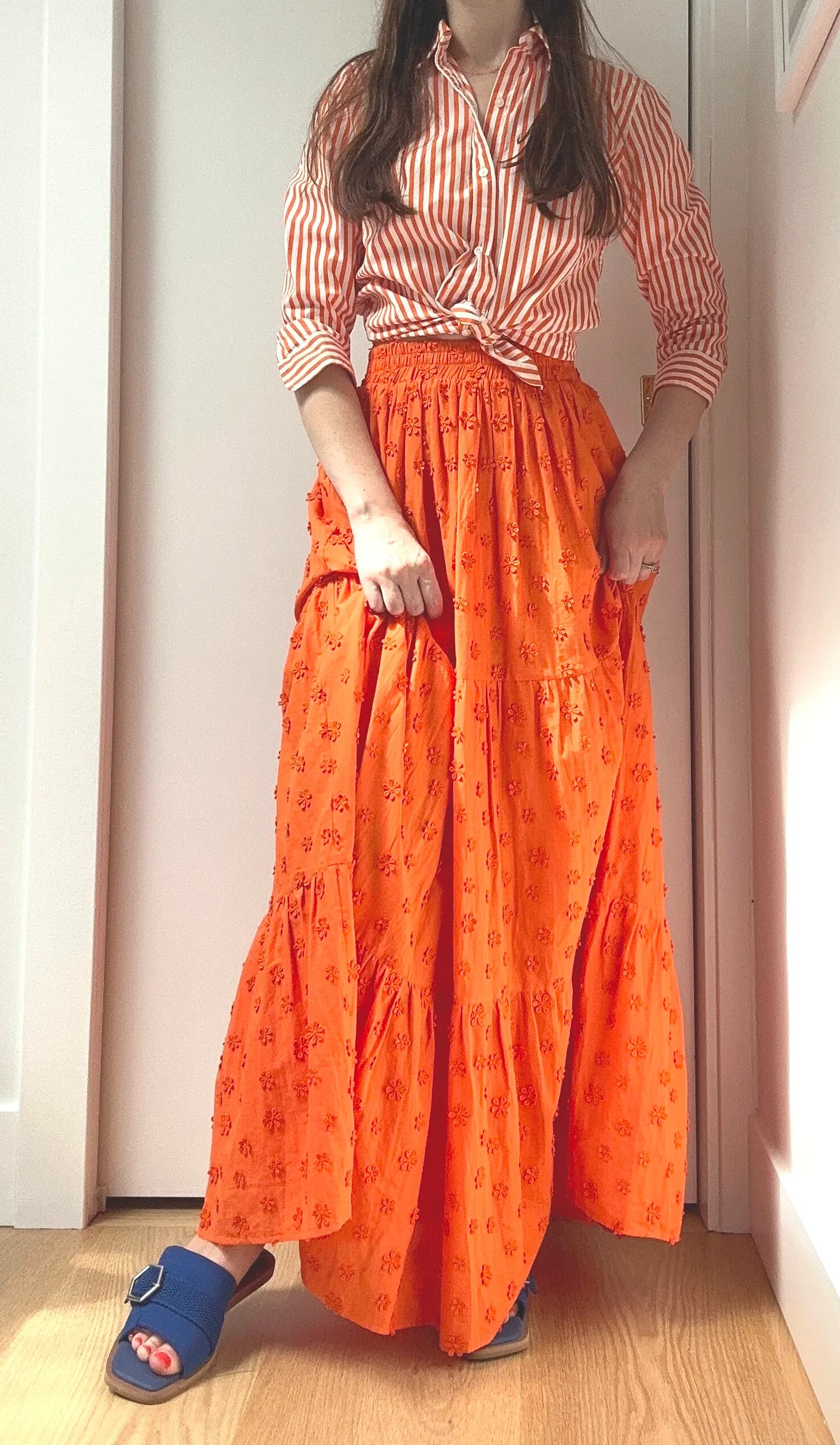
I actually threw another party recently (it was my son’s party and I just invited my son’s entire class) and it was actually a huge success! There was no dress code, although I encouraged everyone to wear my son’s favorite color (orange) if they wanted. I was shocked at how many people complied—even just with an orange hat or hairbow. Yes, we brought out the bouncy castle. I’m realizing now that we probably should have had more snacks (Thanks, Liz! Noted!) I didn’t have any social interactions that felt like something had gone vaguely wrong but I couldn’t figure out what. My brother was there, and during a conversation between him, me, and another parent from my son’s school, he announced that I am a “Reddit neckbeard in a normal mom’s body” so clearly he’s trying to take my social predicament into his own hands and sabotage my masking from the start. But that’s okay.
And I wore this, which I think only a literal pilgrim would find immodest:
You might also like…
At 28, I Taught Myself to Be Likable. Here's How I Did It (Part 1)

BTW, part 2 and part 3 are up now too!
Am I Neurodivergent or Just Annoying?

When I first got diagnosed with ADHD, I was about fifteen. My parents had taken me to see a psychologist, and after a forty-five minute session, she noted that the signs were obvious. “For one,” she said blithely, “There are obvious missed social cues.”
In Defense of Millennial Fashion

We’ve heard a lot about millennial feminism recently (in part from the best writer and most profound intellectual voice in media today: me) and now that I’ve gotten my share of attention, I hereby declare this discourse cycle done.
“…I don’t walk around and see myself as a ‘hot girl,’ just a mom who is reasonably fit for my age.”
That’s the thing, though - you’re not just “reasonably fit for your age,” you’re objectively thin. Probably 97% of women in their mid-thirties who have given birth to two children are bigger/heavier than you. You’re thin, and you wear a lot of very form-fitting clothes, and you’re clearly dressing to be noticed by others - not sexually noticed, but noticed. And I think it’s highly likely that being around you makes other women feel like shit about their bodies in comparison.
As someone who went to both an all Black and White school. One thing I notice about upper class White people that there are a lot of unspoken social rules that you have to learn. One of them is the culture of “false humility”” White girls who are attractive, is subject to this rule. You have to pretend like you are humble and don't think too highly of yourself, and the only flexing you can do is humble brag. My guess is a combination of how you communicate and how you dress you break the false humility rule.