

I Dress For My Personality, And My Personality Is Annoying
I'm realizing the way I dress has been just as socially detrimental as my lack of social cues--perhaps they're the same thing. But how much do I really need to change myself for other people?

For a long time now, I’ve joked that I’m obsessed with social dynamics because I am not naturally gifted at socializing. Call it high-functioning undiagnosed autism, call it just being annoying, but it is what it is, and I didn’t choose it. This lack of talent forced me to examine social dynamics in a way most people never have to. I “taught myself” how to be likable (or at least not extremely off-putting) at the age of twenty-eight (I wrote about that—and what I learned—here). And when I wrote about why nobody comes to my parties, one of my favorite podcasts, Search Engine with PJ Vogt, reached out about it and asked me if I wanted PJ to leverage his journalistic skills to figure out why my parties have such low yield. (I’m underplaying it here but I’ve been a parasocial PJ fan for years so I was actually hyperventilating with excitement.)
Going into the episode interview, I kind of already knew why RSVPs have been a challenge—a lot of people don’t like me. I’m a lot. I am, as many people would kindly put it, “insufferable.” I don’t annoy people to be malicious, it’s just how I am. And as I’ve tried harder to tamp down this part of me, my social life has gotten better, so obviously this isn’t just my unfounded insecurity. It’s not terribly uplifting to say, “the moral of the story is don’t be yourself,” but that masking at least a little, at least at the beginning, has obviously been the right move for me.
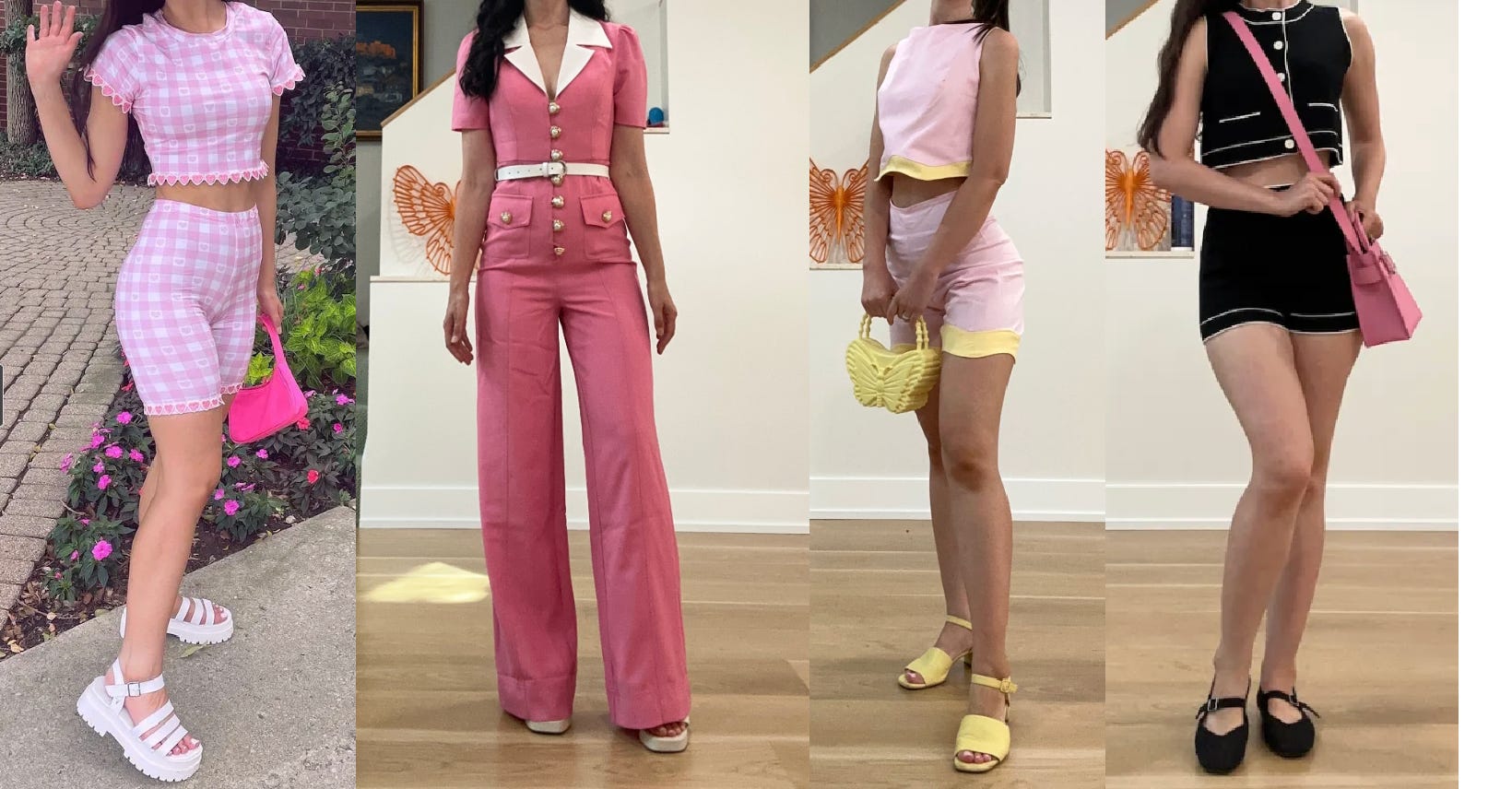
But one thing that came up on the episode—and in previous conversations—is that the way I dress puts people off, especially women. In the, at times, not-so-nice Reddit thread that discussed the episode, multiple people specifically cited my attire as off-putting, immodest, and even “yikes.” The same has been said bluntly even by women who subscribe to me here, often women who love everything else about my work (so I know they’re just speaking honestly and not trying to be mean.)
Although I don’t write about it nearly as often, I’m realizing that the struggles I’ve faced with socialization are not unlike the struggles I’ve faced with fashion, and in many ways, they are interconnected since my fashion appears to be my number two social detriment, right behind impromptu Trump impressions. Although I love fashion and take great pleasure in it, I can’t deny that two of the things I love to do—plan outfits and socialize—are two things at which I am horribly incompetent when combined.
A lot of people who struggle with fashion are people who don’t actually enjoy fashion. Their problem is pretty easy to solve. Once you give them the basics, the clothing that says, at a maximum, “I am a normal human being who wears shirts and pants that fit me and are appropriate for the occasion,” they’re fine. Eventually, they may come out of their shell and experiment with a fun scarf or something. The same goes with people who suck at socializing. Most of the time, they aren’t the same kind of people who love socializing, and they’re bad at it precisely because it’s not their thing. But I am, as many people would say in a variety of situations, “something else.” Similarly to how people might describe my socialization habits or personality, I could never be accused of doing too little with my clothes.
But every time I think about this, I return to one main question: to what degree do I owe it to other people to change myself? It’s an amoral and simple cost/benefit analysis. I can be “who I am” (which very few people like, at least not if it’s all at once) and then have people mostly dislike me, or I can tweak things and be liked. And surely, all of us have had to do this from time to time. None of us attends a job interview wearing sweatpants, so should I really be flummoxed about the idea of consciously covering up and toning down the brightness and patterns (and perhaps, unsolicited standup comedy) if I’m going to be around other moms?
It’s no surprise that fashion and socializing would occupy the same obsessional part of my brain, because for as long as I can remember, I used fashion as a way to connect with other people—while getting both the “fashion” and the “other people” part egregiously wrong, most of the time.
