

Are Other People "Normies," or Are You A Main Character?
Perhaps "enjoying things" and "having thoughts" are not unique to the neurodivergent.

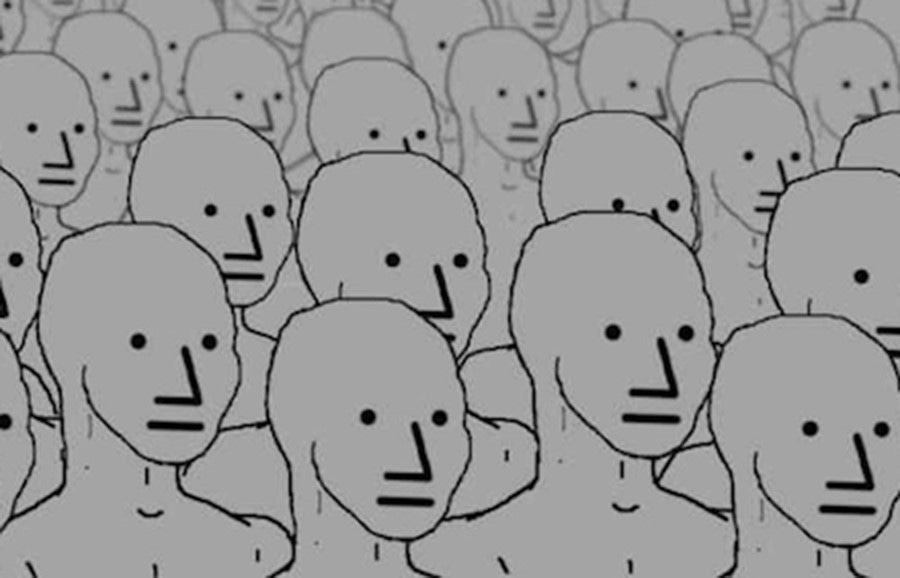
A while ago, I wrote about when I was bullied by way of severe exclusion at a former workplace—a story of the depths of my unpopularity which, paradoxically, was my most popular personal essay of all time. You can read the entire story here, but the only part that you really need to understand for this article is that I worked at a large tech company where most of the other women in my department were, for lack of a better word, “normies,” and despite my best attempts to befriend them, they immediately surmised something was wrong with me and excluded me, going so far as to attend a party I threw but exclude me at my own party so they could take Instagram photos of each other on my balcony. And all of this without the Trump impression!
At the time (and honestly even now) these women felt to me like the bottomless mimosa-drinking version of the ten-headed rat king from The Nutcracker—a grotesque conglomerate of identical, soulless pieces. They wore similar clothes, they talked similarly, and on the rare occasion that I learned something about them, it was always something utterly unsurprising, such as “I enjoy traveling” or “I love dogs.”
But I am, as is everyone, an unreliable narrator. I did not know these women very well because I never got the chance. Perhaps, had I presented myself differently and earned some degree of familiarity with them, my impression of them would have been more nuanced. (Maybe we still wouldn’t have gotten along, but I’d have understood them to be fully-formed humans.) Maybe my view that they were all the same, and contained nothing interesting or unique, says more about me than it does about them.
Women (and occasionally men) like this are ridiculed all over my segment of the Internet, mostly full of people who had not-so-great experiences in middle school and still hold some of that trauma despite finding it embarrassing to do so (I include myself in this, by the way.) It is devastatingly humiliating to say, but I immediately clocked all of those women as former popular girls, and I probably was right because my husband (a former popular kid himself) did the same, and he did so with no deep-seated animosity against People Experiencing Popularity.
This mindset into which I, and to which others like me have fallen, goes a bit like this: we are weird. Even if you can’t tell we’re weird by looking at us, we are, and this makes us different (and perhaps a little special and “superhuman.”) But most people aren’t weird like us, most people are normal. Normal people are boring. Normal people drink from Stanley cups and think that going to Target is the highlight of their week. Normal people like sports and don’t read books. Normal people never have a single, interesting thought, nor do they have any hobbies or obsessions. It’s okay to be nasty to normal people because they don’t really have feelings like the special weirdos and probably hate us anyway, for some shallow reason. Can we, in good conscience, call normal people “people” at all?
